Welcome to the high ridges and deep, emerald hollers of the Blue Ridge. If you have ever stood at an overlook in Great Smoky Mountains National Park, you know the feeling of awe that comes with seeing the endless waves of blue-tinted peaks. But for those of us at NC Uncovered, the true magic of the Smokies isn't just in the vistas—it is in the voices of the past that still echo through the valleys. The park we love today didn't just happen; it was carved out of a complex history of settlement, industry, and a desperate, visionary race to save the land from the saw.
Recently, I had the pleasure of walking through history on a route we call Great Smoky Mountains National Park Uncovered: Mountain Farm Life & Conservation Champions. This journey isn't your typical tourist trek. Instead of chasing waterfalls, we are chasing stories—the stories of the families who lived here for generations and the 'Conservation Champions' who ensured their legacy remained standing.
The Preservation of a Way of Life
To understand the Smokies, you have to understand the transition from the rugged independence of Appalachian farm life to the structured protection of a National Park. This wasn't always a smooth process. When the park was established in 1934, thousands of people had to leave their homes. Yet, through the efforts of early conservationists, several key structures were saved. Our tour traces these survivors, exploring how naming a place is the first step in honoring its history.
Spared the Saw — Preservation Acknowledged
Our journey begins at a poignant marker titled Spared the Saw. Standing here, you are forced to ponder the weight of preservation choices. In the early 20th century, massive logging operations were stripping these mountains bare. When the movement to create a park gained steam, a choice had to be made: what stays and what goes? This marker serves as a reminder that the cabins and barns we see today were intentional survivors. They were 'spared' to tell a story of a time before the industrial machines arrived. It’s a place to reflect on how we decide what parts of our history are worth saving for the next generation.
Blacksmith Shop — Forge of Small Industries
Next, we move to the Blacksmith Shop. In the isolated coves of the Smokies, you couldn't just run to the store for a new hinge or a plow blade. The forge was the heart of the community's small industries. As you look at this marker, think about the immense skill required to shape iron by hand. The blacksmith wasn't just a laborer; they were an engineer, a repairman, and an essential pillar of mountain life. The rhythmic clang of the hammer once signaled that the community was thriving and self-sufficient.
Civilian Conservation Corps — Agency Named on the Land
No exploration of Great Smoky Mountains National Park is complete without honoring the 'Boys in the Woods.' At the marker for the Civilian Conservation Corps (CCC), we stand on ground literally shaped by the Great Depression-era program. The CCC didn't just build trails; they built the park’s identity. From stone walls to the very roads we drive today, the CCC’s labor is etched into the landscape. It’s fascinating to consider how a government agency’s name has become synonymous with the natural beauty of the land it helped restore.
Mingus Mill — A Named Milling Place
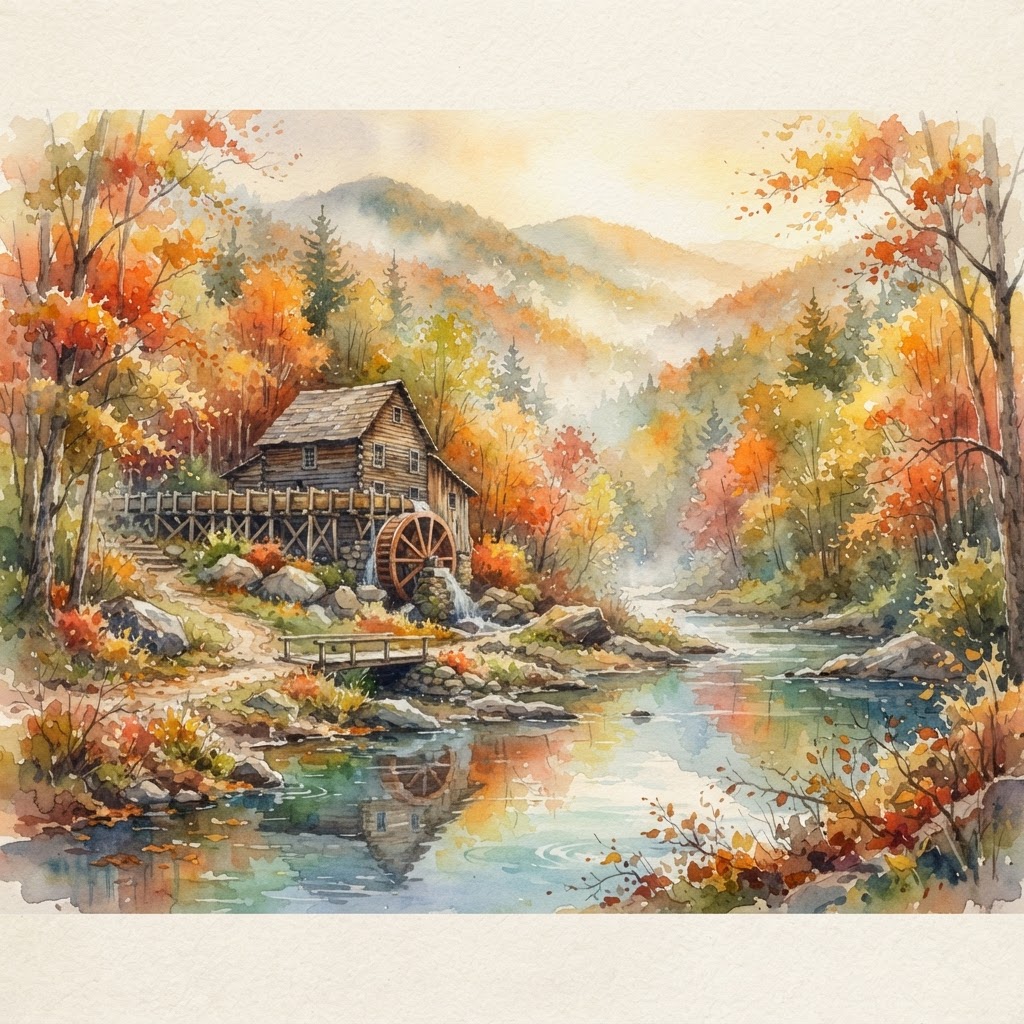
Perhaps the most iconic stop is Mingus Mill. Built in 1886, this isn't your standard overshot waterwheel mill. It uses a steel turbine to power the grindstones, showing that mountain people were often at the forefront of local technology. As you observe the marker at Mingus Mill, ponder what a 'named mill' signals. In the 19th century, a mill was the economic and social hub of the valley. It was where you caught up on news, traded goods, and ensured your family had flour for the winter. The naming of Mingus Mill reflects its status as a landmark of community survival.
Hands That Built — Labor Acknowledged
We often look at historic buildings as if they sprouted from the earth, but the marker titled Hands That Built brings us back to reality. This stop acknowledges the collective labor—the sweat, the strained backs, and the calloused palms—that went into constructing the park's infrastructure. Naming the labor, rather than just the architect or the politician, changes how we perceive these stones. It reminds us that the Smokies are a monument to the common man’s effort.
Meathouse — Storage and Sustenance
It might seem small, but the Meathouse is one of the most vital structures on a mountain farm. This labeled marker invites us to reflect on the sheer grit required for sustenance. Without refrigeration, the meathouse was a fortress against hunger, where salt-cured pork hung from the rafters. It represents a deep knowledge of the seasons and a commitment to providing for one's kin in a beautiful but unforgiving environment.
Horace Kephart's Last Permanent Camp — The Writer's Legacy
We cannot talk about conservation without mentioning Horace Kephart. At the marker for Horace Kephart's Last Permanent Camp, we pause to reflect on a man who fled the 'city life' only to find his soul in the Smokies. Kephart’s writings, specifically Our Southern Highlanders, were instrumental in convincing the world that this region deserved National Park status. His final camp is a sacred spot for those who value the written word as a tool for environmental change. His personal history is now a permanent part of the landscape he fought to protect.
Sorghum Mill and Furnace — Sweet Production Named
Our final stop brings us to the Sorghum Mill and Furnace. In the fall, the air here would have been thick with the sweet, smoky scent of boiling cane juice. Making sorghum was a communal event—a 'stirring'—that brought neighbors together. The naming of this industrial site within the farmstead highlights the diversity of mountain production. It wasn't just about survival; it was about the sweetness of life and the shared labor of the harvest.
Why This Tour Matters
Walking the path of the Great Smoky Mountains National Park Uncovered: Mountain Farm Life & Conservation Champions tour is an exercise in gratitude. We see the names of the people, the agencies, and the structures that define our heritage. It reminds us that conservation is an active choice, one made by champions like Kephart and the nameless hands of the CCC.
As you leave the park, you’ll realize that the Smokies are more than just trees and fog. They are a living museum of human spirit and environmental recovery.
FAQ: Planning Your Visit
Where do I find the Mountain Farm Museum?
The Mountain Farm Museum, which houses many of these markers, is located behind the Oconaluftee Visitor Center near Cherokee, NC.
When is the best time to see the Sorghum Mill in action?
While the mill structure is there year-round, the park often hosts demonstrations in the autumn, usually in September or October, during the 'Mountain Life Festival.'
Who was Horace Kephart?
Kephart was a librarian and author who became the leading advocate for the creation of the Great Smoky Mountains National Park. He lived among the mountain people and documented their culture with deep respect.
Is the tour accessible for families?
Yes! The area around the Oconaluftee Visitor Center and Mingus Mill is mostly flat and very stroller-friendly, making it perfect for kids to learn about history while exploring outdoors.
Do I need a permit to visit these sites?
While entry to the park is free, remember that as of 2023, a valid parking tag is required for any vehicle parking for more than 15 minutes anywhere within the park boundaries.
Sponsored
Google Ads slot — will render here once AdSense is connected.
Share this article