The Original Washington: Discovering the Hidden History of North Carolina’s Pamlico Gem
Most people think of marble monuments and sprawling museums when they hear the name "Washington." But long before the capital on the Potomac was even a blueprint, there was another Washington. Tucked away on the sweeping curves of the Pamlico River in North Carolina, Washington—affectionately known as "Little Washington" by locals—holds a history so deep and a resilience so profound that it’s high time the rest of the world caught on.
If you are looking for a travel experience that blends coastal beauty with a gritty, fascinating past, the Washington NC Uncovered tour is the definitive way to see this town. Here, history isn't just in a book; it's in the salty air and the charred foundations of the buildings that refused to stay down.
The First City Named for the General
It is one of North Carolina’s proudest trivia points: Washington, NC, was the very first city in America to be named for George Washington. While other towns eventually followed suit, Washington was incorporated in 1782—before the Revolutionary War had even officially concluded with the Treaty of Paris.
This wasn't just a random act of patriotism. The town was the brainchild of John Gray Blount, a merchant prince and land speculator whose influence cannot be overstated. Blount was the titan of early North Carolina commerce, part of a massive family network that shaped the state’s politics and trade. Walking through the historic district today, you can still feel the ambition of the Blount era—a time when Washington was a bustling port connecting the Inner Banks to the wider world.
A City Defined by Water and War
To understand Washington, you have to understand the Pamlico River. During the Civil War, the river was both a lifeline and a target. The town’s strategic position made it a constant flashpoint between Union and Confederate forces.
The Naval Action and the USS Picket
One of the most thrilling chapters of the Washington NC Uncovered tour involves the naval dimension of the war. Most Civil War histories focus on land battles, but in Washington, the gunboats on the Pamlico River defined the conflict. The story of the USS Picket is legendary—a Union gunboat that met a dramatic end in the river, serving as a reminder of the high-stakes naval action that took place right off the waterfront.
The Siege of 1863 and the Tragedy of 1864
Washington didn't just see skirmishes; it endured a full-blown siege. In 1863, Confederate forces surrounded the Union-held town for an entire month. While the Confederacy failed to retake the town during that siege, their determination to hold eastern North Carolina was clear.
However, the town’s greatest tragedy came in 1864. As Union forces finally withdrew from the city, they set it ablaze. The Burning of Washington was one of the most complete destructions of any North Carolina city during the war. Residents watched as their homes and livelihoods vanished in a wall of smoke. Yet, true to the spirit of the "Original Washington," the people returned, rebuilt, and refused to let their legacy be reduced to ash.
The Legend of Dr. Susan Dimock
One of Washington’s most remarkable exports wasn't a commodity like tobacco or timber—it was a person. Dr. Susan Dimock, born in Washington in 1847, became one of the first female physicians in America. In an era when women were largely barred from medical education, Dimock’s brilliance forced doors open.
Though her career lasted only six years before she tragically died at sea at the age of 28, she revolutionized the way medicine was practiced and taught. Her story is a poignant highlight of the local history, proving that even a small coastal town can produce giants who change the world.
Jacksonian Power: Churchill Cambreleng
Washington’s influence also reached the halls of Congress through Churchill Cambreleng. A Washington native, Cambreleng became one of the most powerful Jacksonian congressmen in the United States. He was a master of trade and commercial policy, shaping the economic landscape of a young nation for decades. When you walk the streets of Washington, you aren't just in a sleepy river town; you're in the birthplace of American political power.
The Secret: The Pamlico River Waterfront Revival
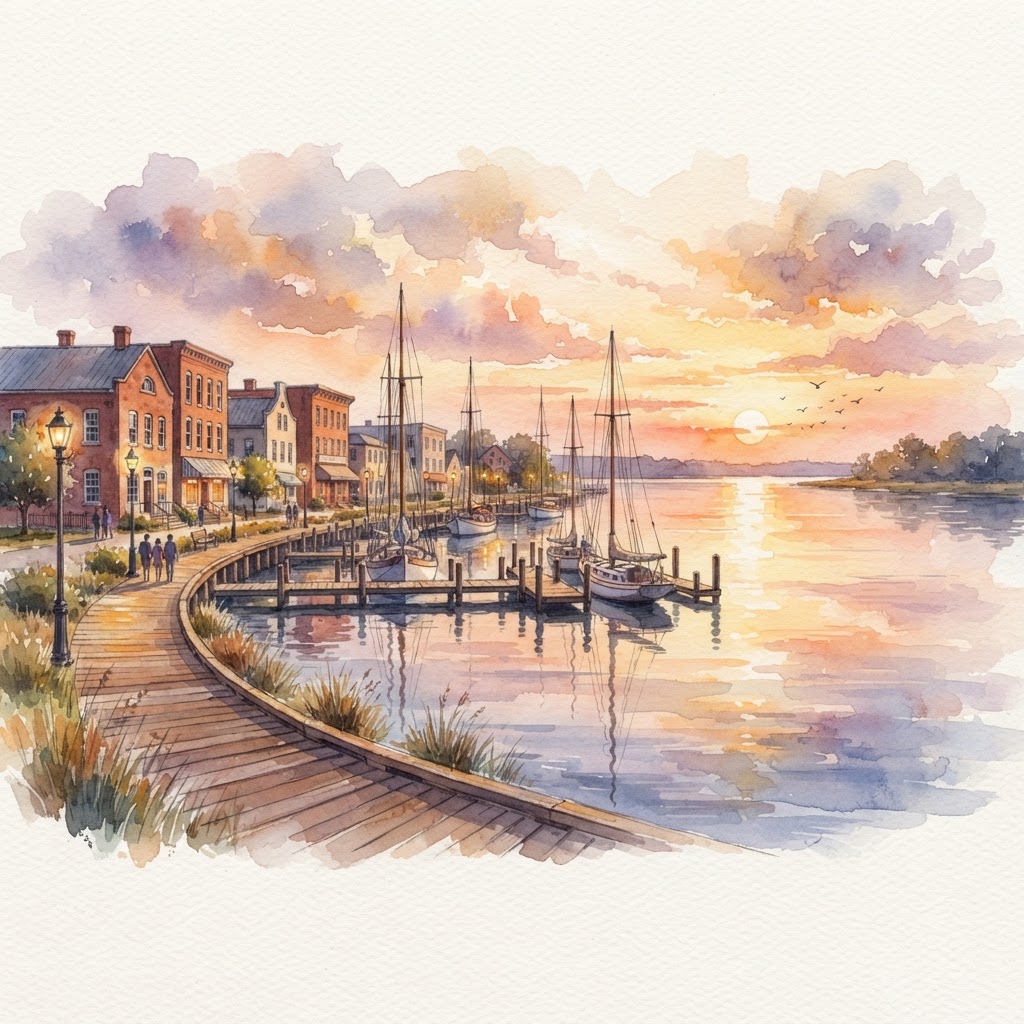
If you haven't visited Washington recently, you are missing out on what I call the "Inner Banks Secret." The Pamlico River Waterfront has undergone a stunning revival. Unlike some coastal towns that feel like tourist traps, Washington’s waterfront is genuinely alive. It is walkable, historic, and vibrant.
- The Harbor District: Full of local boutiques and farm-to-table dining.
- The Waterfront Boardwalk: Perfect for sunset strolls where you can watch the sailboats glide by.
- The Estuarium: A world-class facility that highlights the unique ecology of the Pamlico.
Why You Need to Visit Washington, NC
Washington is a town for people who love stories. It’s for the traveler who wants to know the why behind the scenery. From the merchant legacies of the Blounts to the ashes of the Civil War, every corner of this town has a secret to share. Exploring Washington through the lens of history makes every sunset over the river feel a little more meaningful.
FAQ: Planning Your Trip to Washington, NC
What is the best time of year to visit?
Spring and Fall are spectacular. The weather is mild, perfect for walking the waterfront, and the humidity of the NC summer hasn't quite kicked in.
Is Washington, NC family-friendly?
Absolutely. Between the North Carolina Estuarium and the waterfront parks, there is plenty for kids to explore. The Washington NC Uncovered tour is also a great way to engage older children in history that feels real and exciting.
Where should I stay?
Look for historic Bed and Breakfasts in the downtown area. Many of these homes survived the fires or were part of the late 19th-century rebuilding boom, offering a direct link to the town’s history.
How do I book the history tour?
You can find information on the Washington NC Uncovered experience through local heritage groups or by visiting the downtown visitor center. It is highly recommended for anyone who wants to see the "real" Washington.
Is Washington close to the Outer Banks?
It is often called the "Heart of the Inner Banks." While it is inland from the ocean, it offers a more sheltered, river-centric coastal experience that is about a 1.5 to 2-hour drive from the famous OBX beaches.
Sponsored
Google Ads slot — will render here once AdSense is connected.
Share this article