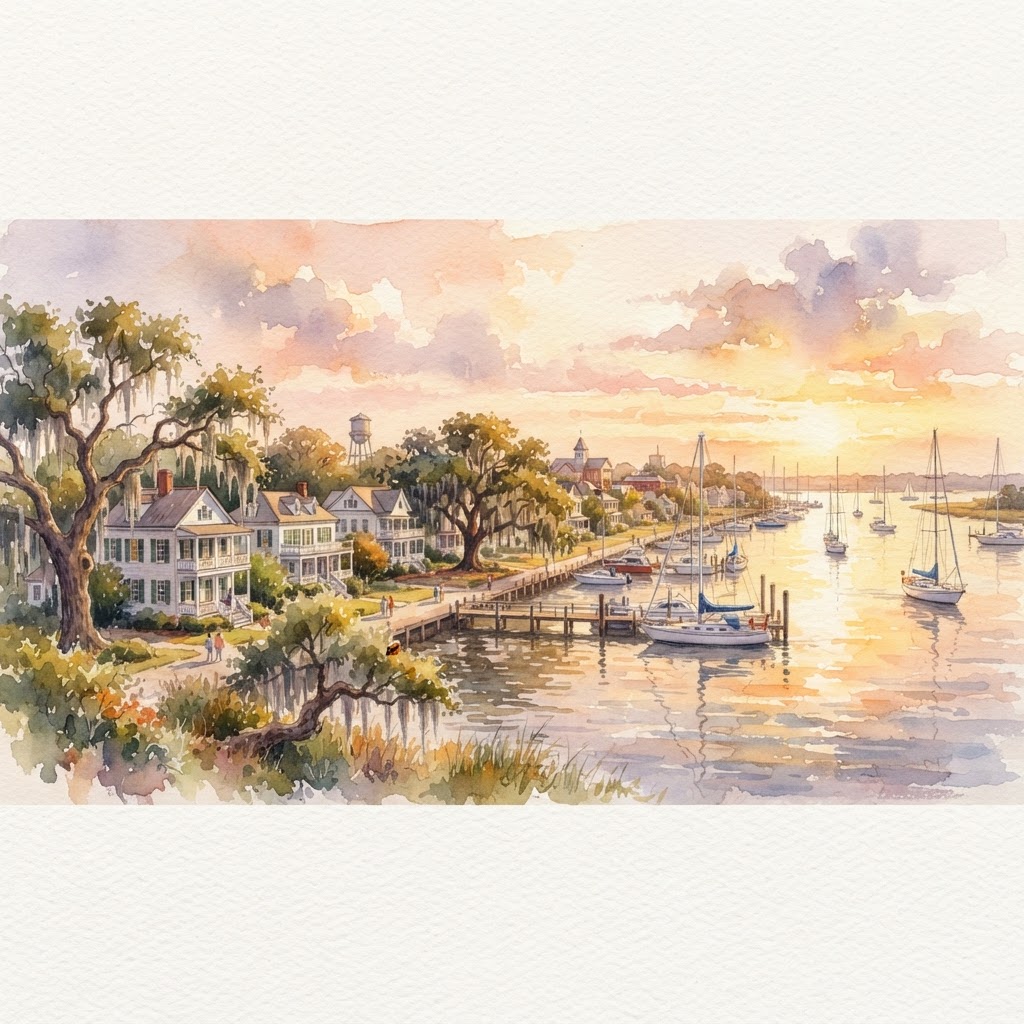
Southport Uncovered: Walking Through the Heart of North Carolina History\n\nHey there, travel fam! If you’ve ever scrolled through photos of moss-draped oaks, historic white-picket fences, and sailboats bobbing in a harbor, you’ve likely seen Southport, North Carolina. Often called the 'Salisbury of the South' or recognized as the backdrop for countless Nicholas Sparks films, Southport is more than just a pretty face. It is a town built on the bones of revolution, literary genius, and maritime grit. Today, we’re going deep—beyond the film sets—to explore the real stories that make this place the soul of the Cape Fear. We’re going to walk the path of the Southport Uncovered tour, revealing the secrets that most tourists walk right past.\n\n## The Blueprint of a Coastal Classic: The 1792 Town Plan\n\nWhen you first arrive in Southport, you’ll notice something unique about its layout. The streets aren’t a confusing maze; they are a deliberate, historic grid. In 1792, a town plan was drawn up consisting of the first 100 lots. This founding geometry is still the skeleton of the town you walk today. As you stroll along the waterfront, you are literally stepping on the original boundaries defined centuries ago. This wasn’t just a random settlement; it was a planned gateway to the Cape Fear River, designed to be the 'Watching Post' for everything entering North Carolina’s most vital waterway.\n\n## Fort Johnston: Where Empires Crumbled\n\nIf walls could talk, the ones at Fort Johnston would be shouting. Established in 1745, this is the oldest fort site in North Carolina. But its most dramatic moment came in 1775. Imagine the tension: the American Revolution is brewing, and the air is thick with rebellion. Josiah Martin, the last Royal Governor of North Carolina, realized that the revolutionary fervor in the inland capital was too much to handle. He fled to Fort Johnston, seeking the protection of British cannons. \n\nHowever, the safety didn't last. As the locals closed in, Josiah Martin was forced to flee once again, this time to a British warship anchored in the Cape Fear. That moment—that midnight escape—effectively signaled the end of Crown authority in North Carolina. When you stand on the grounds of Fort Johnston today, you’re standing at the exact spot where the British Empire began to lose its grip on the Old North State. The Southport Uncovered experience brings this high-stakes drama to life right where it happened.\n\n## A Literary Giant’s Roots: Robert Ruark’s Southport\n\nWhile the soldiers were busy with war, the waterfront was busy shaping one of the 20th century’s greatest writers. Robert Ruark, the celebrated journalist and novelist, was born in Southport in 1915. If you’ve ever read 'The Old Man and the Boy,' you know how much this town influenced his voice. The live oaks, the salty air, and the wisdom of the local fishermen became the bedrock of his storytelling. Walking the waterfront today, you can see the same views that inspired Ruark’s prose. The town hasn't just preserved its buildings; it has preserved the atmosphere that allowed Ruark to capture the essence of coastal American life.\n\n## The Hidden Hero: Catalino Tingzon\n\nHistory is often told through the lens of generals and governors, but Southport’s true fabric is woven by pioneers like Catalino Tingzon. A Filipino sailor who made Southport his home in the 1920s, Tingzon is documented as one of the earliest Filipino-American settlers in North Carolina. His presence in this coastal community reminds us that Southport has always been a crossroads of the world. Sailors from every corner of the globe once docked here, and men like Tingzon stayed, built lives, and became part of the local legend. It’s these smaller, personal stories that the Southport Uncovered tour highlights so beautifully.\n\n## The Guardian of the Cape: Fort Caswell and Brunswick Town\n\nSouthport’s history isn’t confined to the town limits. Just a short drive or boat ride away are two of the most significant ruins in the state. First, there’s Brunswick Town/Fort Anderson. This was the colonial capital before Wilmington even existed, but it was burned by the British in 1776. Today, you can walk through the ruins—some of the best-preserved colonial remnants in North Carolina—and see the massive earthworks of Fort Anderson built right over them during the Civil War. \n\nSpeaking of the Civil War, you can’t miss Fort Caswell. Positioned at the mouth of the Cape Fear, this Confederate stronghold was the guardian of the 'Lifeline of the Confederacy.' It protected the blockade runners that brought essential supplies to Wilmington. Standing at the point where the river meets the Atlantic, you can feel the strategic weight this location held for centuries.\n\n## The Secret Escape: Old Baldy Lighthouse\n\nFinally, no trip to Southport is complete without a 'secret' excursion to Bald Head Island. Accessible only by ferry (no cars allowed!), the island is home to Old Baldy. Built in 1817, it is the oldest lighthouse in North Carolina. Climbing to the top gives you a panoramic view of the entire Cape Fear estuary. It is the most complete escape in Brunswick County, offering a glimpse into what the coast looked like before the modern world took over. The juxtaposition of Southport’s bustling waterfront and the quiet solitude of Old Baldy is what makes this region so special.\n\n## FAQ: Planning Your Visit\n\n### How do I take the Southport Uncovered tour?\nYou can book guided historical walks that cover all these sites, including Fort Johnston and the Robert Ruark boyhood home, through local heritage organizations in downtown Southport.\n\n### Is Southport, NC walkable?\nAbsolutely! The original 1792 town plan makes it one of the most walkable towns in the South. Most historical sites and the waterfront are within a few blocks of each other.\n\n### Can you drive to Old Baldy?\nNo, you must take the passenger ferry from Southport/Deep Point Marina to Bald Head Island. Once there, you can rent a golf cart or a bicycle to reach the lighthouse.\n\n### What is the best time to visit?\nSpring and Fall offer the best weather for walking tours. October is particularly beautiful when the humidity drops and the history feels a little more 'haunting.'\n\nSouthport is a place where the past isn't buried—it's lived. Whether you're a history buff, a literature lover, or just someone looking for a beautiful view, this town has a story for you. Come and uncover it for yourself!
Sponsored
Google Ads slot — will render here once AdSense is connected.
Share this article
#Travel#North Carolina#History#Southport#Cape Fear#Coastal Life