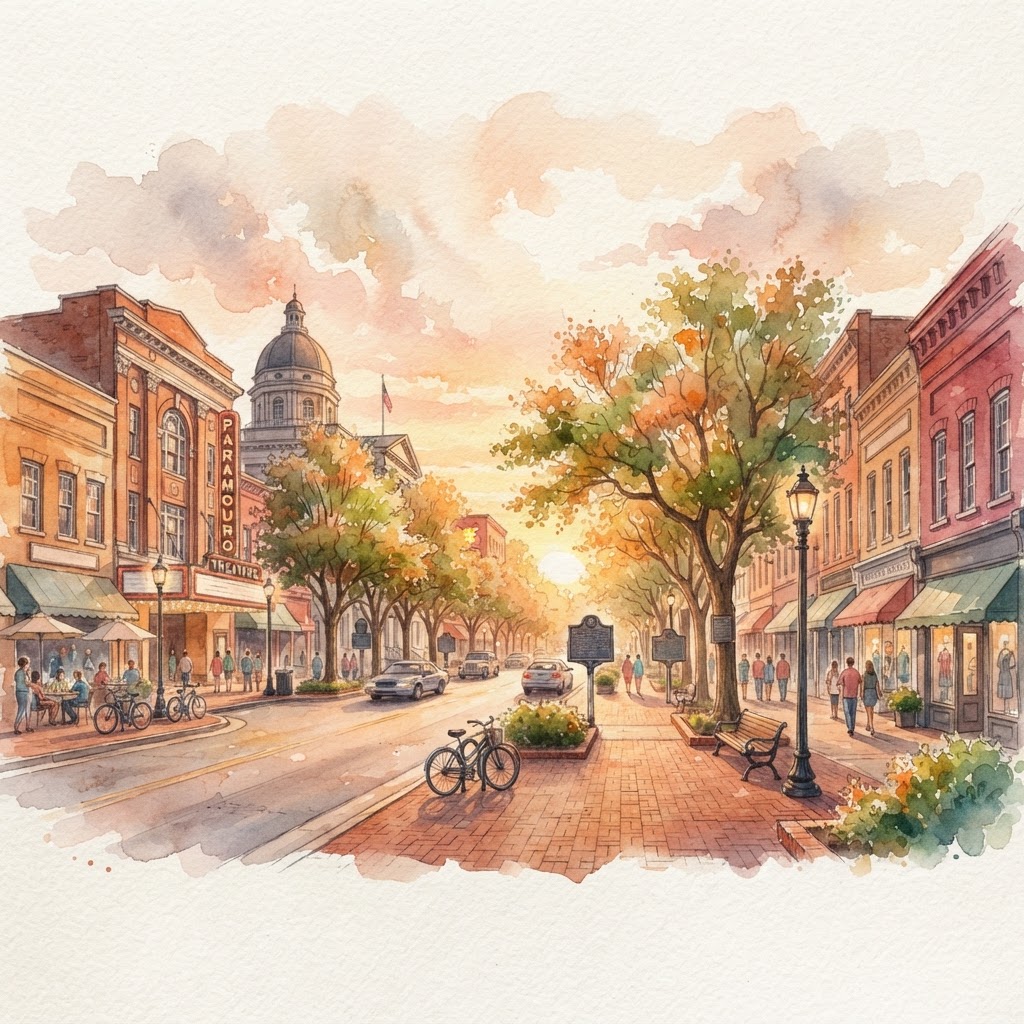
Goldsboro Uncovered: Exploring Civil War Battles, Historic Legends, and Aviation Echoes in Eastern NC\n\nNestled in the heart of Wayne County along the gentle curves of the Neuse River, Goldsboro, North Carolina, holds a unique and layered place in American history. For many travelers, the town is known best for barbecue joints and the distant roar of F-15E Strike Eagles overhead. But if you take a closer look at the streets and tranquil riverbanks, you will uncover a mosaic of stories spanning three centuries.\n\nWhether you are a deep-dive history buff or an adventurous road-tripper looking for hidden Carolina gems, walking through Goldsboro feels like turning the pages of an epic chronicle. The self-guided journey through the tour Goldsboro Uncovered: Civil War Bridges & Air Power offers the ultimate roadmap to this community's contested river crossings, social pioneers, and military milestones.\n\nGrab a sweet tea, lace up your comfortable walking shoes, and let's explore Wayne County's most compelling landmarks.\n\n---\n\n## Early Roots along the Neuse: From John Lawson to Waynesborough\n\nLong before locomotives converged here and transformed Goldsborough into a vital railroad hub, this terrain was an early frontier explored by pioneering naturalists and early European settlers.\n\n### Echoes of Early Exploration: The John Lawson Marker\nOne of the earliest names tied to this region is John Lawson, the intrepid English surveyor and explorer whose 1709 book, A New Voyage to Carolina, introduced the flora, fauna, and indigenous nations of eastern Carolina to the wider world. A dedicated marker commemorates Lawson's early presence in this riverine country, grounding Goldsboro's modern streetscapes in centuries-old wilderness pathways.\n\n### Waynesborough: The Lost River Town\nBefore Goldsboro became the county seat, there was Waynesborough. Placed along the Neuse River, it served as Wayne County's bustling center until the Wilmington and Raleigh Railroad reshaped the local economy in the late 1830s. Today, the marker for Waynesborough marks that early founding landscape, reminding us that rivers were once the highways of commerce before tracks took their crown.\n\n---\n\n## Flashpoints of the Civil War: Rails, Rivers, and Marches\n\nBecause Goldsboro sat squarely at the crossroads of vital rail lines connecting the Confederacy to Virginia, it became an irresistible strategic target throughout the American Civil War.\n\n### Sherman's March to the Sea and Goldsboro's Junction\nBy the spring of 1865, Union General William Tecumseh Sherman set his sights squarely on Wayne County. The historic marker honoring Sherman's March documents how Goldsboro served as the strategic consolidation point for over 100,000 Union troops coming together after long, grueling campaigns through Georgia and the Carolinas. For weeks, this quiet Southern town stood as the focal point of military operations in the Eastern Theater.\n\n### Fierce Clashes: The Attack of the Seventeenth Massachusetts\nConflict had already touched the region years before Sherman arrived. In December 1862, Union forces launched the Goldsborough Expedition to disrupt the Confederate rail system and destroy the critical Neuse River bridge. The marker commemorating the Attack of the Seventeenth Massachusetts recalls the intense, bloody unit action during this contested crossing. Standing near the historic riverways, you can almost hear the sharp crack of rifle volleys and the roar of artillery defending the vital railroad bridge.\n\n---\n## Voices of Conscience, Care, and Civic Strength\n\nGoldsboro’s character is not shaped solely by military conflict. The community has long been a laboratory for compassionate healthcare, social activism, and public reflection.\n\n### The Legacy of Gertrude Weil\nA must-visit stop along the Goldsboro Uncovered: Civil War Bridges & Air Power route is the marker honoring Gertrude Weil (1879–1971). Born into a prominent local family, Weil became one of North Carolina's most remarkable civic leaders. She dedicated her long life to:\n\n* Championing women's suffrage and equal voting rights across the state.\n* Advocating for progressive labor legislation and the eradication of child labor.\n* Leading civil rights initiatives and community relief programs during the Great Depression.\n\nWeil's courage and dedication make her marker an essential monument to grassroots democracy.\n\n### Cherry Hospital: Compassion and Institutional History\nAnother vital community touchstone is the marker for Cherry Hospital. Established in the late 19th century, this historic campus reflects the evolution of mental healthcare and institutional service in eastern North Carolina. Its presence underscores the diverse civic fabric that allowed Wayne County to support generations of North Carolinians through changing times.\n\n### The Freedom Tree: Preserving Civic Memory\nIn the center of town, The Freedom Tree stands as a solemn, living public symbol of civic values, reflection, and memory. Originally dedicated to honor prisoners of war and those missing in action during the Vietnam War, it has expanded in public memory to embody resilience, community solidarity, and liberty for all who call Goldsboro home.\n\n---\n\n## Modern Skies: Seymour Johnson Air Force Base\n\nLook toward the clouds on any given weekday, and you will likely witness modern air power in action. Goldsboro's contemporary identity is deeply intertwined with Seymour Johnson Air Force Base.\n\nEstablished during World War II and named after naval aviator and Goldsboro native Lieutenant Seymour A. Johnson, the base has evolved into a premier installation housing the 4th Fighter Wing and the 916th Air Refueling Wing. The base and its surrounding markers honor decades of aviation excellence—from WWII transport training to the cutting-edge tactics of modern fighter jet crews.\n\n---\n\n## Planning Your Historic Day Trip to Goldsboro\n\nTo make the most of your self-guided excursion on the Goldsboro Uncovered: Civil War Bridges & Air Power tour, here are a few practical local tips:\n\n* Start Downtown: Center Street in downtown Goldsboro features wide, landscaped medians, locally owned cafes, and easy parking, making it an ideal starting point.\n* Pack a Picnic: Old Waynesborough Historical Village offers shady trails along the Neuse River where you can ponder the early days of Wayne County.\n* Catch the Jets: Stop by the roadside viewing areas near Seymour Johnson AFB for prime views of takeoffs and landings.\n* Savor Eastern NC Barbecue: No trip to Wayne County is complete without grabbing a plate of wood-smoked, vinegar-based pulled pork and hushpuppies at one of the area's iconic smokehouses.\n\n---\n\n## Frequently Asked Questions (FAQ)\n\n### What is the 'Goldsboro Uncovered: Civil War Bridges & Air Power' tour?\nIt is a curated historic tour highlighting Goldsboro's diverse landmarks, taking visitors from colonial waterways and Civil War battlegrounds to historic healthcare facilities and cutting-edge military aviation sites.\n\n### Who was Gertrude Weil and why is she famous in Goldsboro?\nGertrude Weil was a pioneering social activist from Goldsboro who served as the first president of the North Carolina League of Women Voters and championed civil rights, labor reform, and community service throughout the twentieth century.\n\n### Can civilians visit Seymour Johnson Air Force Base?\nWhile the active military installation requires specific credentials or sponsored access, visitors can view memorials, historic gate displays, and public markers honoring the base's aviation history throughout Goldsboro.
Sponsored
Google Ads slot — will render here once AdSense is connected.
Share this article
#North Carolina#Goldsboro#Wayne County#Civil War History#Heritage Travel#Military History