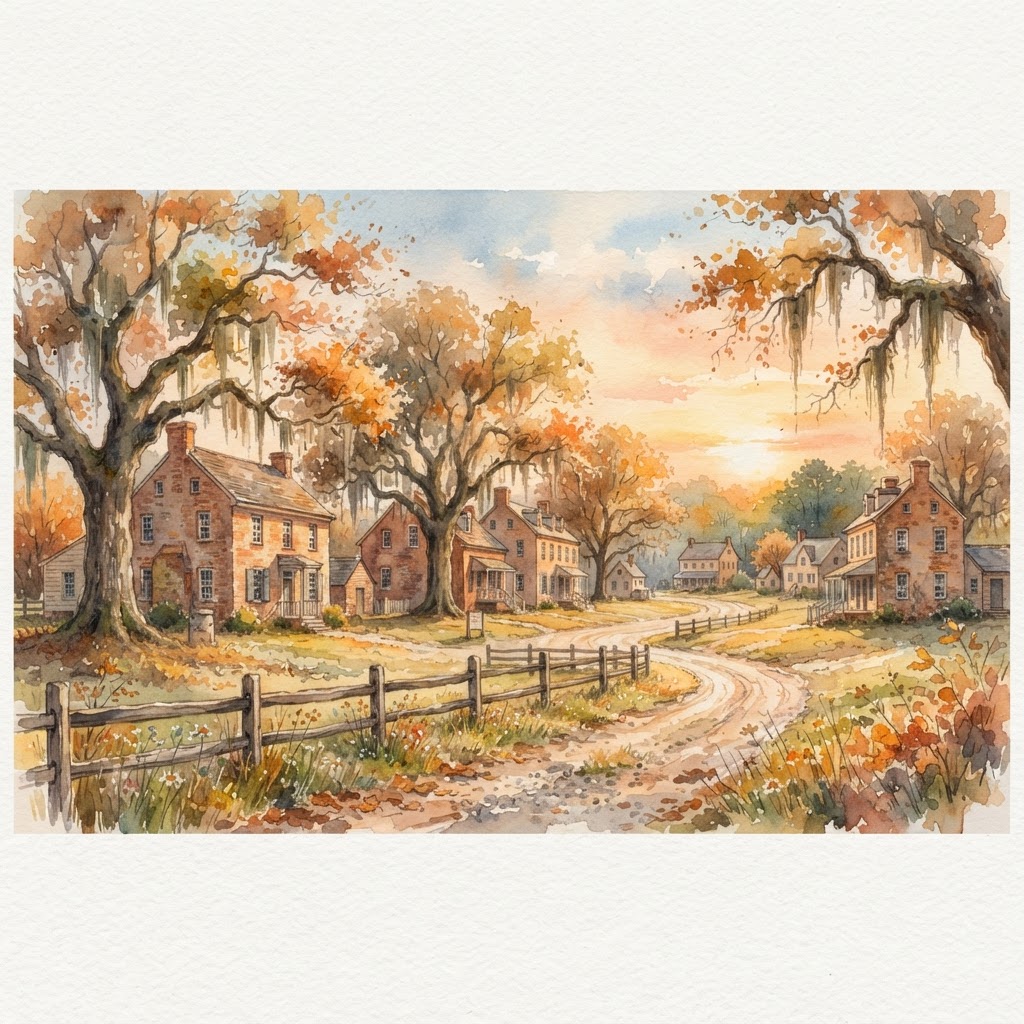
The Rebellion Started Here: Why Every American Needs to Visit Halifax, North Carolina
If you take a look at a North Carolina license plate, you’ll see the words "First in Freedom." Most visitors assume it’s a catchy slogan about the Wright Brothers or perhaps a general nod to the Southern spirit. But if you head about an hour and a half northeast of Raleigh to the quiet, moss-draped town of Halifax, you’ll discover the literal truth behind that motto.
Before Thomas Jefferson ever put quill to parchment in Philadelphia, a group of brave North Carolinians gathered in this riverside trading hub to do the unthinkable: they officially authorized their delegates to vote for independence from the British Crown. It happened on April 12, 1776—nearly three months before the national Declaration of Independence.
Today, you can walk exactly where these revolutionaries stood. I recently spent a weekend diving into the Halifax Heritage Tour — NC Declared Independence Before Philadelphia, and I can tell you, this isn't your average dry history lesson. It is a profound, atmospheric journey into the heart of the American spirit.
The Moment That Changed Everything: The Halifax Resolves Site
Our journey begins at the Halifax Resolves Site. Standing here, it’s hard not to feel a chill. On that spring day in 1776, eighty-three delegates met at the Fourth Provincial Congress and adopted the "Halifax Resolves." This wasn't just a protest; it was the first official action by an entire colony to call for total independence.
Walking the grounds today, the air feels heavy with the weight of that decision. In the 18th century, this was high treason. These men were putting their lives, their families, and their fortunes on the line. The local guides do a fantastic job of painting the picture of the tension that must have filled the salty air as the vote was cast.
Politics, Pints, and Plotting: The Taverns of Halifax
One of my favorite things about the Halifax Heritage Tour — NC Declared Independence Before Philadelphia is how it highlights the "informal" side of history. Great ideas weren't just born in courtrooms; they were born over mugs of ale.
The Eagle Tavern Site
This was the "power spot" of colonial Halifax. The Eagle Tavern Site represents the hub where political leaders gathered to debate the merits of separation from Britain. You can almost hear the whispered conversations and the clinking of pewter mugs. This wasn't just a place to sleep; it was a war room disguised as a public house.
Tap Room at the Colonial Tavern
To get an even better sense of the atmosphere, head to the reconstructed Tap Room at the Colonial Tavern. This space shows exactly how the political classes socialized. It’s a sensory experience—the smell of woodsmoke and the dim lighting transport you back to an era where the future of a continent was being decided over a game of cards and a dram of rum.
Step Into the 1700s: Historic Halifax State Historic Site
The centerpiece of the town is the Historic Halifax State Historic Site. This isn't just one building; it's a preserved colonial village. The structures here span from the 1740s to the 1830s, offering a visual timeline of how the town evolved from a revolutionary hotbed into a bustling center of commerce.
What makes this site special is the authenticity. You aren't looking at recreations; you’re looking at original structures that witnessed the birth of a nation.
The Architecture of a New Nation
As you move through the town, several specific buildings stand out for their incredible preservation:
- Owens House (circa 1760): This is one of the finest surviving examples of colonial merchant life. Walking through the rooms, you see the prosperity that Halifax enjoyed as a port town. It provides a stark contrast to the rugged life of the soldiers who would soon be fighting for the very ground the house sits on.
- The Clerk’s Office: Built in 1832, this brick structure was the "hard drive" of the colonial era. It housed the deeds, wills, and court documents that defined legal life in the county. To this day, the smell of old paper and dust gives it an unmistakable aura of authority.
- Colonial Prison and Jailer’s House: Not everything in the revolution was glorious. The prison reminds us of the consequences of dissent. Here, debtors, criminals, and political agitators were held in cramped, dark conditions. It’s a sobering reminder of what was at stake for those who chose to defy the King.
The River That Started It All: Roanoke River Heritage Walk
To truly understand why Halifax was chosen as the site for the Provincial Congress, you have to look at the water. The Roanoke River Heritage Walk takes you along the banks where commerce and culture flowed. This river connected the inland Piedmont farms to the coastal markets and, eventually, to the world.
Watching the water flow by, you realize that Halifax wasn't just an isolated village; it was a cosmopolitan crossroads. It was this connection to the wider world that brought the Enlightenment ideas of liberty and self-governance to the doorsteps of North Carolinians.
Why You Need to Visit Now
In a world where history is often reduced to a few paragraphs in a textbook, the Halifax Heritage Tour — NC Declared Independence Before Philadelphia offers a tangible connection to our roots. It’s a reminder that big ideas often start in small places.
Whether you are a history buff, a nature lover, or just someone looking for a unique weekend road trip in North Carolina, Halifax delivers. It’s quiet, it’s beautiful, and it holds a secret that every American should know: The revolution didn't start in a big city. It started in a tavern, on a riverbank, and in the hearts of people who refused to be subjects any longer.
FAQ: Planning Your Visit to Historic Halifax
Q: Where exactly is Halifax, NC? A: Halifax is located in the northeastern part of the state, just off I-95. It’s about a 90-minute drive from Raleigh and about 2 hours from Richmond, VA.
Q: How long does the Halifax Heritage Tour take? A: To truly see all the stops, including the Roanoke River Heritage Walk and the various historic homes, I recommend allowing at least 3 to 4 hours. If you're a real history nerd, you could easily spend a full day here.
Q: Is the site kid-friendly? A: Absolutely! There is plenty of open space for kids to run around, and the "Living History" aspects, like the jail and the taproom, are usually a big hit with younger visitors.
Q: When is the best time to visit? A: Spring and Fall are spectacular. April 12th is a particularly special time to visit, as the town often holds reenactments and celebrations for "Halifax Day" to commemorate the signing of the Resolves.
Q: Is there an admission fee? A: The Historic Halifax State Historic Site is generally free to roam, though some guided tours of the interior of the buildings may have a small fee or suggested donation. Always check the official North Carolina State Historic Sites website for current hours and pricing.
Sponsored
Google Ads slot — will render here once AdSense is connected.
Share this article